
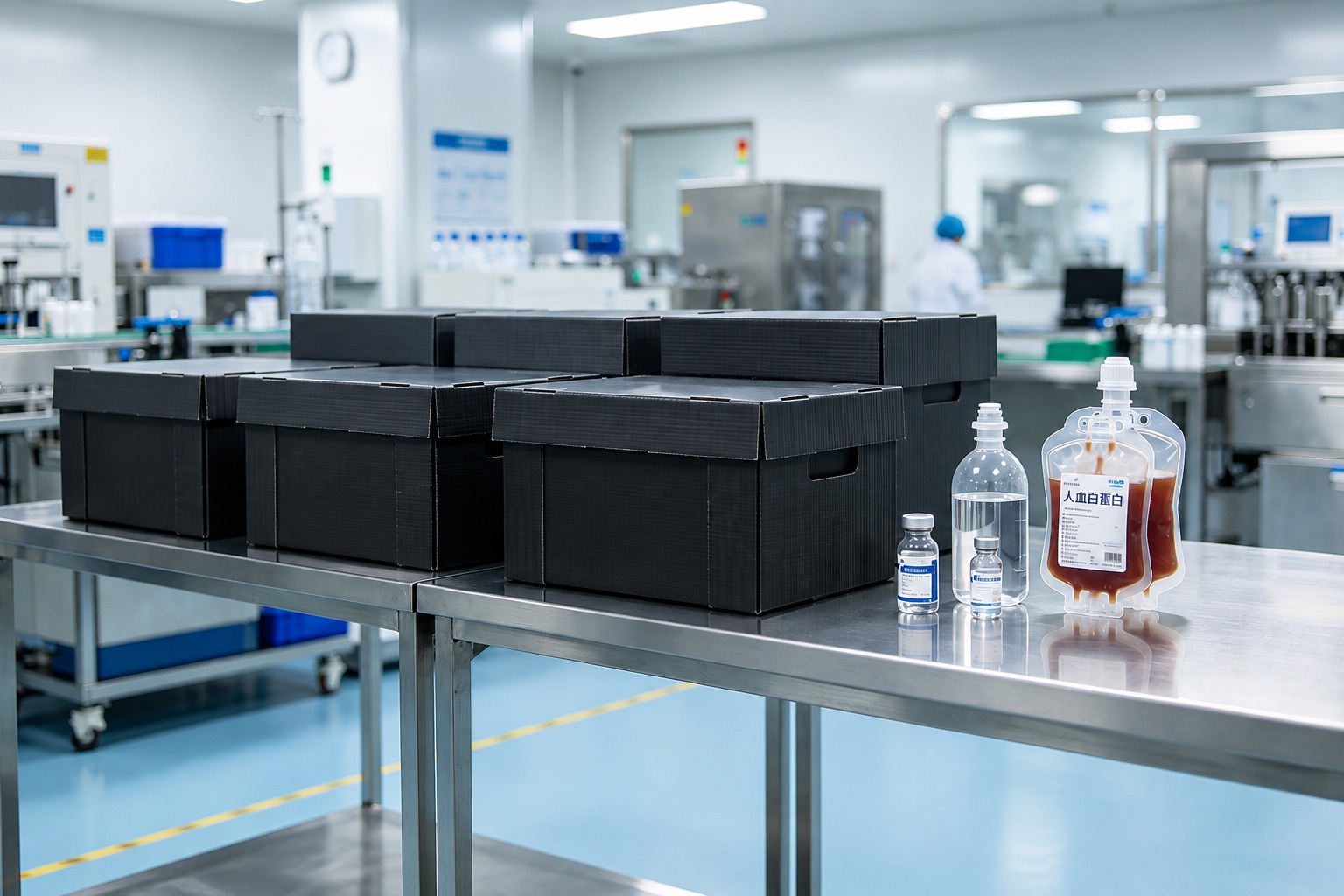
Cleanliness objective, production environment and any cleanroom classification remain pending documentary evidence and customer approval.
Biologics and injectable-product logistics concepts
Reusable protection across controlled medical logistics.
A configurable corrugated-plastic secondary/tertiary packaging concept for controlled-area transfer, temperature-managed logistics, in-hospital movement and product-specific cushioning.
Regulated-use boundaryThis site does not claim verified GMP, ISO, cleanroom-class, food-contact or medical-device certification for a quoted package. Certificates, material-contact status, validation protocols and regulatory acceptance must be confirmed for each product and jurisdiction.
01 / Design intent
Cleanable. Protective. Route-specific. Reusable.
Weight, cushioning and impact performance depend on the final hollow-sheet structure and fitted inserts.
Actual temperature range, duration, condensation exposure, closure and monitoring must be qualified for the route.
Reuse life, cleaning protocol and end-of-life route require project-specific evidence; no blanket food-grade or recyclability claim is made.
GMP, ISO, pharmaceutical-packaging and traceability requirements must be documented and assigned before use.
02 / Six operating environments
One platform, configured by workflow.
Controlled-area transfer
Surface finish, particle shedding, cleaning chemistry, disinfection, residue, drying and handling method must be validated on the finished construction. No cleanroom class or GMP suitability is claimed by this page.
Temperature-managed storage
Chilled and frozen routes have different temperature, duration, condensation, closure and stacking requirements. The broad material reference range shown elsewhere on the site does not establish finished-package cold-chain performance.
Cushioning and separation
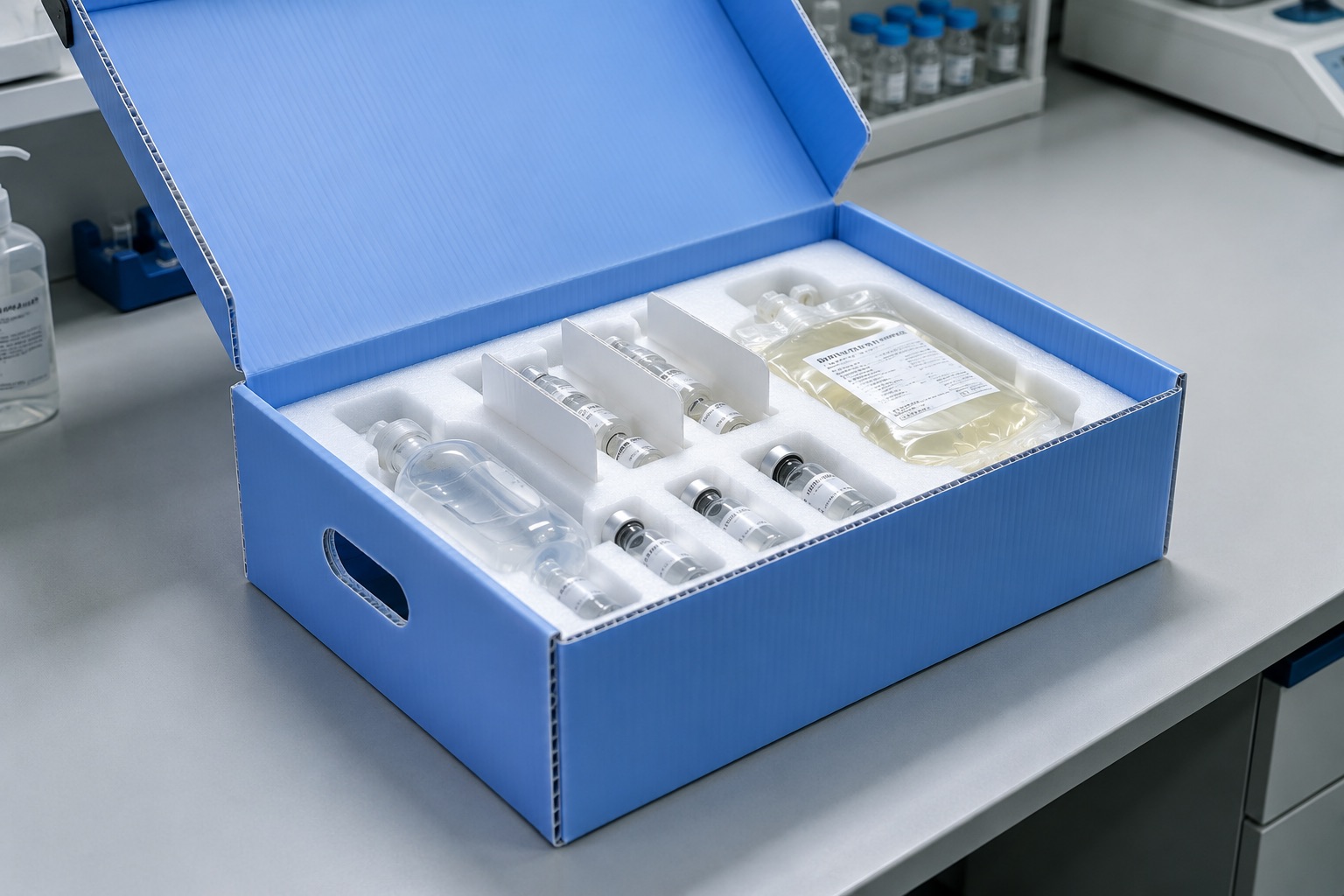
Custom partitions, bottle trays and cushioning liners follow the container profile. Individual bottle or bag separation reduces collision and compression, while the hollow structure and insert create a two-stage impact-absorption system.
Temperature-managed logistics
Impact, abrasion, temperature and humidity requirements are defined for the actual route. GPS, data logging and RFID are optional project components, not included or validated by default.
In-hospital movement
Lightweight, cleanable construction for frequent movement between pharmacies, laboratories and departments. Custom printing can identify product name, specification, batch and expiry. A sealed latch is intended to reduce dust and microbial ingress.
Modular customization
Structures and functions can be combined around the product, route and handling environment rather than forcing one standard box into every use.
03 / Protective insert system
Fit the container, isolate every unit.
Knife-card partitions, bottle trays and cushioning liners are customized around the shape and dimensions of the primary container.
- Close fit establishes the structural foundation for protection
- Independent positions reduce movement, collision and compression
- Hollow sheet plus a fitted liner creates two-stage cushioning
- Configurations support medicines, precision instruments and other fragile loads
04 / Box configurations
Four formats for different operating priorities.
Standard
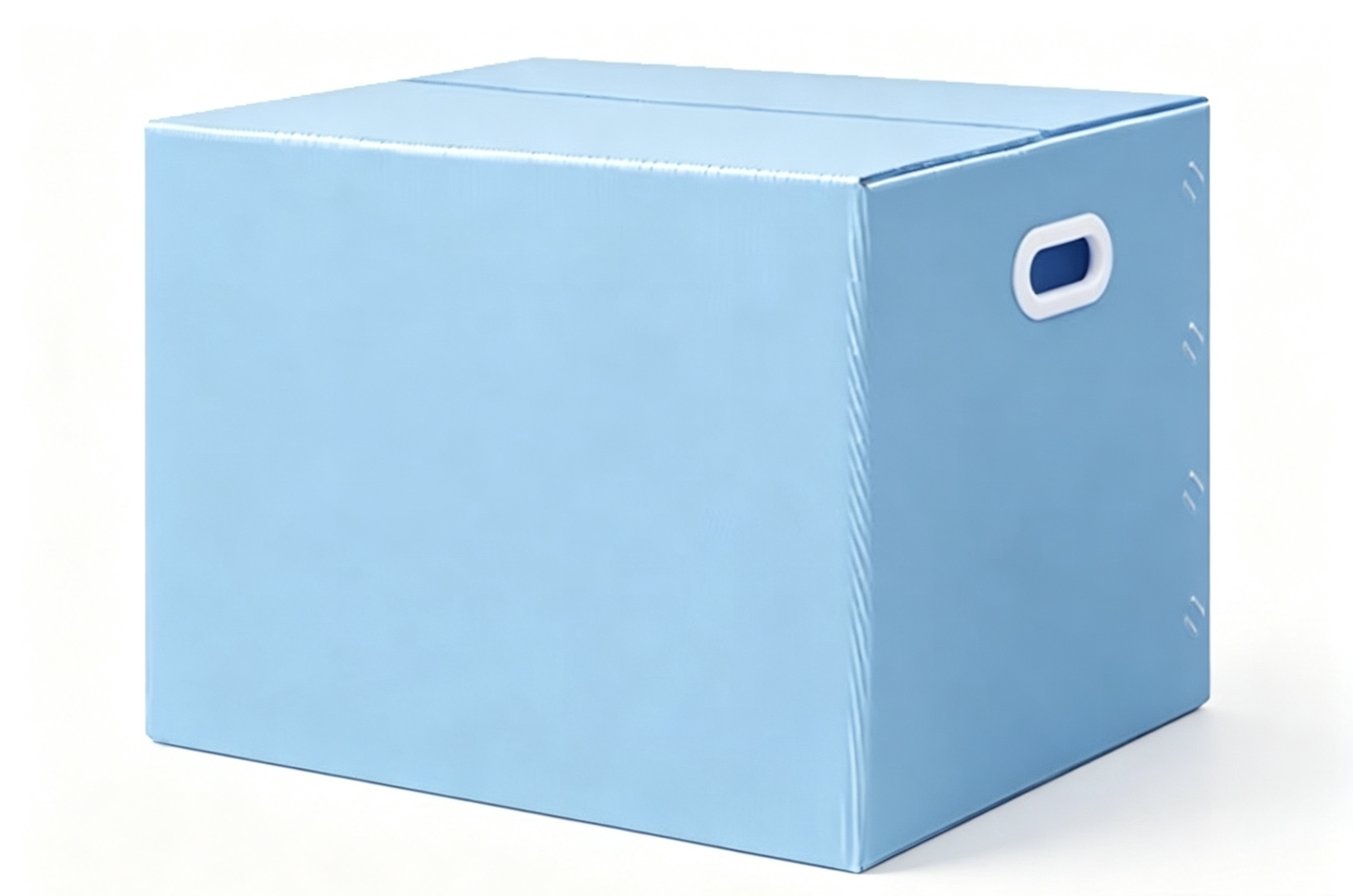
A general configuration for routine turnover, subject to load, cleaning and handling requirements.
Partitioned
Independent cells can limit movement; fit and cushioning must be validated with the actual primary containers.
Leak-control
Dust, liquid and temperature-control requirements must be defined and tested; no absolute seal claim is made.
Foldable
Foldable formats may reduce empty-return volume. The actual reduction is calculated from the approved assembled and collapsed dimensions.
05 / Project evidence
Protection, economics, operations and sustainability require validation.
Protection
Impact, moisture and temperature performance are established through the finished-package test plan.
Cost
Reuse life and cost outcome are not stated as fixed values. Model them from route trials, loss, cleaning, return logistics and approved package cost.
Operational control
GMP alignment, cleaning controls, RFID and traceability apply only when expressly required, documented and validated for the project.
Environmental outcome
No waste, carbon, recyclability or ESG benefit is claimed without a defined comparison, service-life evidence and end-of-life route.
Medical and compliance note
This page does not certify suitability for pharmaceuticals, biologics or injectable products. Before use, confirm material-contact status, controlled-area evidence, cleaning compatibility, temperature qualification, monitoring hardware, reuse protocol and applicable North American regulatory requirements.
Verified value / Pilot Validation
Qualify the route, not a generic medical claim.
The persuasive advantage is a cleanable, configurable PP corrugated platform that can be trialed around the actual product, handling route and monitoring plan.
Cleanable PP construction
PP corrugated sheet contains no paper fibres to shed during rinsing and can be configured with dividers, lids and protective interfaces.
How we validateValidate the finished joints, inserts and cleaning chemistry against the project cleanliness objective.
Route-specific temperature management
Insulation, cooling media, closure and monitoring are selected around the actual route rather than a fixed website temperature claim.
How we validateUse an instrumented shipment or chamber study with defined duration, payload and acceptance limits.
Foldable return direction
Foldable structures can reduce empty-return space compared with the same box in its assembled form.
How we validateCalculate the reduction from approved dimensions and confirm handling durability through the return loop.
Manufacturer reference layer
Manufacturer literature describes medical-logistics directions, not a blanket GMP, ISO, cleanroom, food-contact, temperature, seal, reuse or savings certification. Each must be evidenced for the quoted configuration.
Scope boundary: BEE ARMOR North America is the market-facing name. Manufacturing and written specifications are provided by BEE ARMOR (Guangdong) Plastics Co., Ltd. in Dongguan. Final material, structure, performance, compliance, availability and commercial terms are confirmed in writing for the actual project.
Pilot Validation
Test the fit before we lock the claim.
Bring the real product, current package and operating route. We will help define a small-batch comparison, the observations to record and the evidence needed for a written project specification.
Start a pilot brief →Email Allen Wang
Allen Wang · SMS +1 778 319 1691 · allen.wang@beearmor.com.cn
Send an SMS