
Knowledge guide / 03
Ventilation, leak control and stacking in cold-chain packaging
Fresh produce, seafood and chilled foods can share a cold route while requiring very different package structures. Start with the product and process step.
01
Map the distribution stage
Harvest, pre-cooling, packing, cold storage, transport, retail display and reuse create different priorities. Define where the package enters and exits the process and whether it remains with the product.
02
Choose airflow or containment deliberately
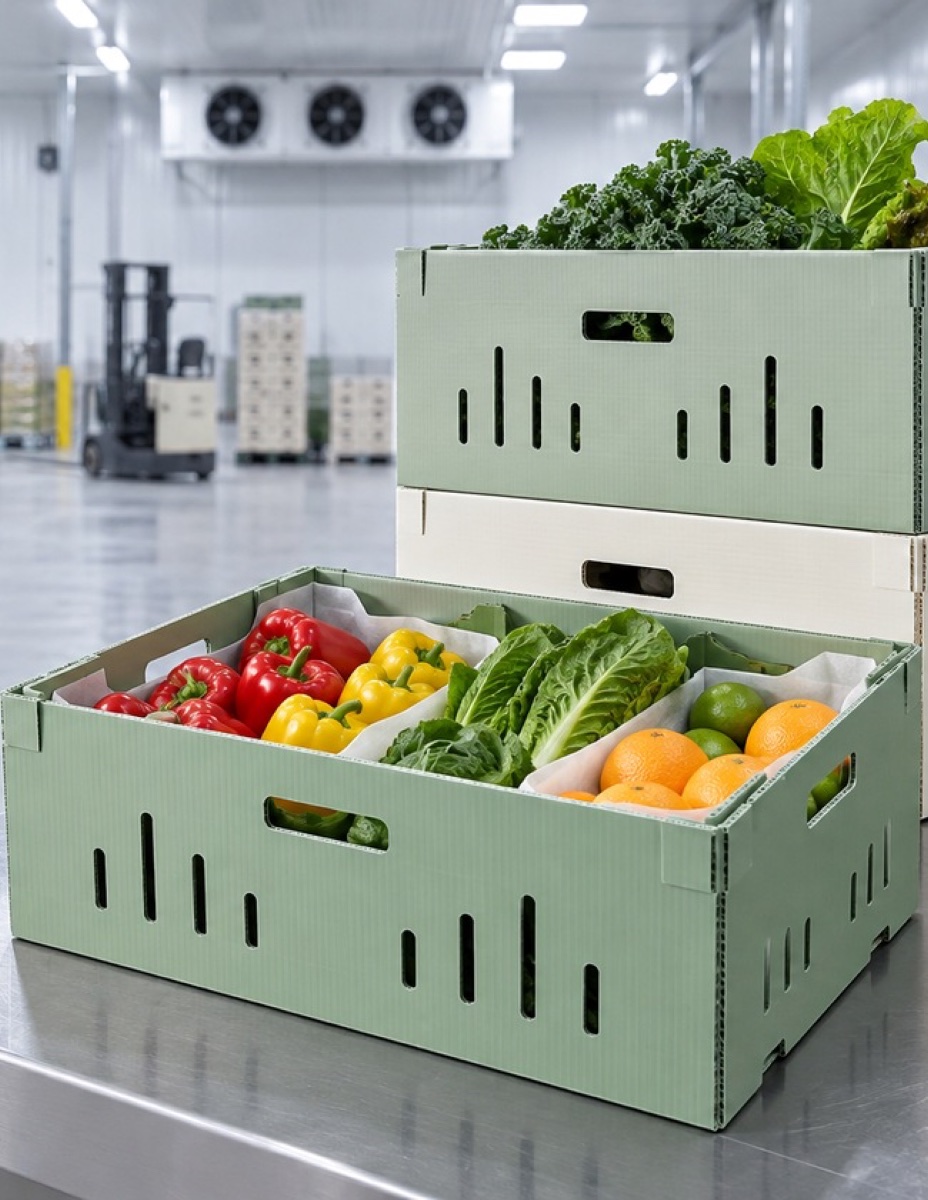
Produce pre-cooling may require controlled ventilation through the package and pallet. Seafood or wet product may prioritize containment and drainage. Adding holes without an airflow plan can reduce strength without delivering effective cooling.
03
Protect stacking performance
Board direction, wall design, hand holes, ventilation openings, moisture exposure and pallet pattern influence compression. Review the complete stack at the expected temperature and holding time.
04
Account for temperature and condensation
Low temperature can change material and joint behavior, while transitions can create condensation. Confirm the actual temperature range, duration, freezing risk, wash-down and storage conditions.
05
Treat print as an operating feature
Graphics can support branding, lot identification, handling instructions and QR codes. Confirm ink adhesion, scuff exposure, cleaning and whether the package will be reused across products or customers.
06
Pilot with the real commodity
Use the actual product, fill pattern, cooling process, pallet configuration and transport route. Evaluate temperature pull-down, drainage, box deformation, product damage and operator handling.
This guide is general information. Final material, structure, cleaning, performance, compliance and acceptance criteria must be confirmed for the actual product, route and jurisdiction.